Why Study Natural Perfumery?
The art, science and discipline of working with natural aromatic materials
Our sense of smell remains one of the most fascinating areas of human sensory experience. As scientific research advances and interest in fragrance grows across art, culture and industry, the study of perfumery offers increasingly varied creative and professional possibilities.
Natural perfumery presents a particular challenge.
Botanical aromatic materials are chemically complex, subject to natural variation and often demanding in their behaviour within a composition. Learning to work with them requires patience, precision, careful observation and an increasingly sophisticated understanding of scent.
For those willing to undertake the study, natural perfumery offers a remarkable field of creative and intellectual exploration.
Understanding the Sense of Smell
Although we rely on our sense of smell throughout our lives, its mechanisms and capabilities continue to be investigated.
Advances in olfactory science are improving our understanding of how humans perceive, distinguish and interpret odours.
One particularly interesting area of research concerns olfactory learning.
A study published in eLife in February 2026 demonstrated that training people to distinguish between complex odour mixtures could produce lasting improvements in olfactory discrimination, with some improvements extending to previously untrained odours.
This is an important consideration for anyone interested in perfumery.
A trained perfumer develops the ability to identify characteristics within aromatic materials, distinguish subtle differences, recognise relationships between odours and describe sensory experiences with increasing accuracy.
Through regular evaluation and observation, students can begin developing the olfactory knowledge and vocabulary necessary for perfume composition.
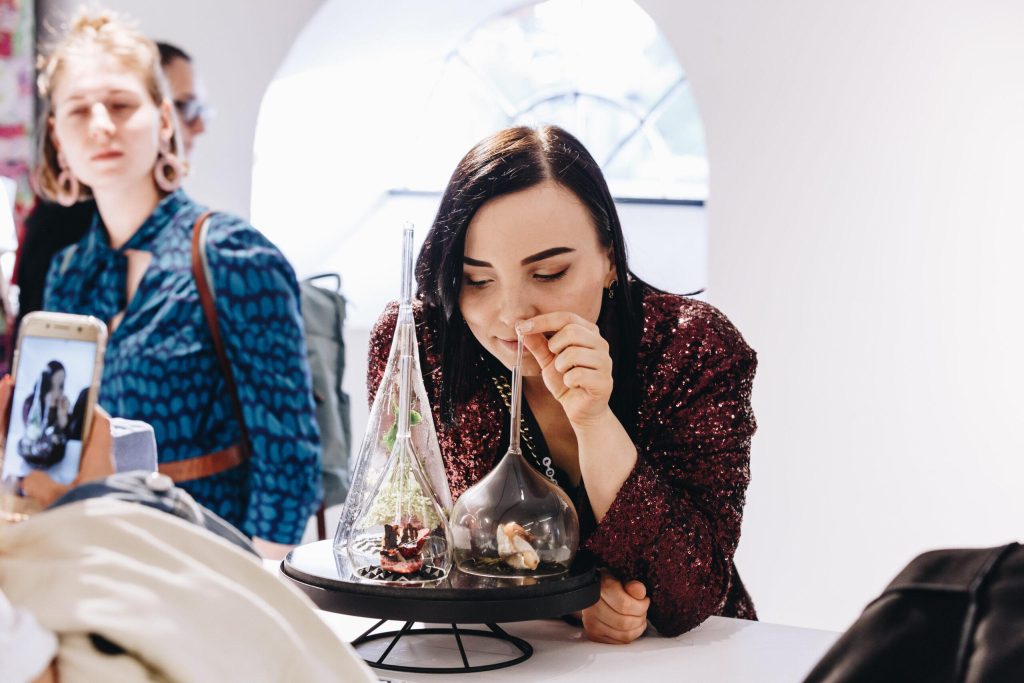
The study of perfumery begins with learning how to smell.
The Particular Challenge of Natural Materials
Natural perfumery requires the artist to work with materials that are already complex compositions in themselves.
An essential oil may contain dozens or even hundreds of naturally occurring chemical constituents. These interact to produce the material’s distinctive aroma, volatility, strength and behaviour.
Consider rose.
Rose otto and rose absolute originate from the same botanical source, yet their different extraction processes produce materials with noticeably different aromatic characteristics.
The perfumer must understand these distinctions and how they affect a finished composition.
Unlike a single isolated aromatic molecule, a botanical extract may contribute several olfactory characteristics simultaneously. It may introduce freshness, warmth, sweetness, spice, earthiness or other nuances that influence the overall perfume.
This complexity is one of natural perfumery’s greatest artistic strengths. It is also one of its greatest technical challenges.
Working with the Variability of Nature
The chemical composition of natural aromatic materials may vary according to the plant’s geographical origin, growing conditions, botanical variety, harvesting practices and extraction method.
Even different batches of material from the same supplier can exhibit subtle differences.
Scientific research into essential oil quality continues to demonstrate the importance of botanical identity, chemotype, harvesting conditions and processing in determining aromatic composition.
For a natural perfumer, this means that understanding a material involves more than memorising its general fragrance description.
It requires repeated evaluation, attention to quality, careful documentation and familiarity with the material’s behaviour.
A formulation may need adjustment when a particular botanical extract changes.
The ability to recognise and respond to these differences is part of developing professional judgement.
The Art of Natural Perfume Composition
A successful natural perfume requires a carefully considered relationship between its materials.
Each ingredient contributes to the development of the fragrance, from the initial impression through its evolution and eventual dry-down.
The perfumer must learn how to achieve balance, contrast, harmony, depth and persistence.
Some materials are exceptionally powerful and require considerable restraint. Others are delicate, fleeting or difficult to incorporate effectively.
A composition may initially appear harmonious, only to reveal an imbalance after several hours or days.
Learning to identify and resolve these problems is central to the craft.
This involves accurate measurement, methodical experimentation, evaluation, modification and allowing sufficient time for the composition to develop.
The creative process combines technical understanding with imagination and sensory judgement.
Natural perfumery is an art supported by disciplined practice.
A Foundation for Further Study in Perfumery
The skills developed through the study of natural aromatic materials are valuable beyond the botanical palette.
Olfactory discrimination, knowledge of volatility, accord construction, material evaluation, formulation accuracy and an understanding of aromatic chemistry are relevant throughout the wider fragrance industry.
A perfumer who has developed these abilities through natural materials brings an established foundation to the subsequent study of isolated aroma molecules, modern fragrance chemistry or other areas of perfumery.
Each field presents its own challenges and demands further learning.
The discipline acquired through natural perfumery provides a particularly valuable starting point because it requires the student to work with the complexity and natural variation of botanical extracts from the outset.
Perfumery, Science and the Wider Creative World
The growing interest in smell extends well beyond conventional fragrance development.
Olfactory research now intersects with neuroscience, chemistry, technology, cultural heritage, sensory design and the arts.
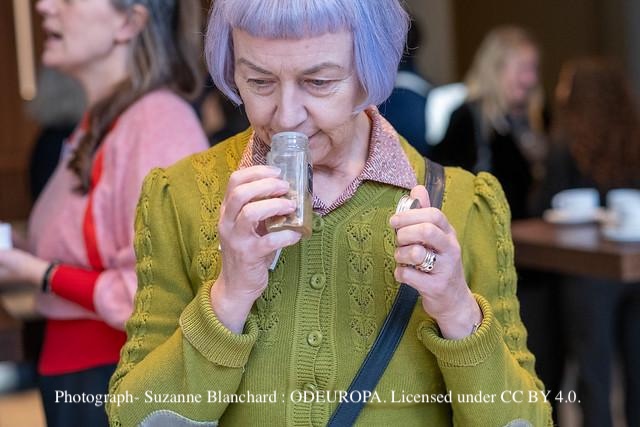
The European research project ODEUROPA, for example, has explored how historical smells can be identified, documented and recreated, bringing together researchers, cultural institutions and perfumers.
Such projects demonstrate how scent can become a medium for historical interpretation, artistic expression and cultural exploration.
Natural perfumery offers particularly interesting possibilities in this context.
Botanical materials carry associations with geography, agriculture, traditional practices and the history of trade and extraction.
Studying them introduces the perfumer to a much wider field of knowledge involving botany, history, culture, chemistry and creative practice.
Natural Perfumery and Professional Opportunities
The fragrance industry offers a variety of opportunities for individuals with specialist knowledge of aromatic materials.
For some, the objective is to develop an independent perfume house or create bespoke botanical fragrances.
Others may wish to extend an existing career in aromatherapy, cosmetic formulation, botanical extraction, ingredient supply or product development.
Natural perfumery knowledge may also support work in scent education, creative consultancy and interdisciplinary projects involving fragrance.
For those considering an independent business, technical competence is especially important.
Developing a perfume for commercial sale involves considerably more than creating an attractive fragrance.
The perfumer must understand ingredient quality, responsible sourcing, formulation records, safety requirements, product presentation and the regulations governing cosmetics in the intended market.
Knowledge of natural materials can also contribute to informed decisions concerning biodiversity, ethical supply chains and the responsible use of botanical resources.
Natural ingredients require careful evaluation. Their botanical origin alone does not guarantee safety, sustainability or suitability for every application.
Professional education provides the opportunity to develop a more informed and responsible approach to these questions.
Who Should Consider Studying Natural Perfumery?
Natural perfumery attracts students from a remarkably wide range of backgrounds.
Some are practising perfumers who wish to develop a deeper understanding of botanical materials. Others are aromatherapists, cosmetic formulators, artists, designers, growers, distillers or entrepreneurs interested in developing their existing knowledge.
Many begin with no previous experience in perfume formulation.
What unites them is an interest in understanding scent and learning how to create with it.
Previous experience can provide a useful starting point, but the essential skills of observation, evaluation and composition are developed through study and practice.
For those approaching perfumery as a new profession, the discipline offers opportunities to combine scientific learning with artistic development.
For those already working with aromatic materials, it provides a structured approach to developing more advanced formulation skills.
Study Natural Perfumery with the Natural Perfume Academy
Founded in Ireland in 2008, the Natural Perfume Academy specialises in structured online education dedicated to natural and botanical perfumery.
Our CPD-Certified Natural Perfumery Diploma Course provides a comprehensive foundation in the art and science of natural perfume composition.
Through twelve modules, students study perfume history, olfactory development, raw-material evaluation, aromatic chemistry, safety, formulation techniques and the principles of professional perfume creation.
Practical exercises, assignments, evaluations and tutor feedback allow students to develop their knowledge progressively.
The course is fully online and self-paced, enabling students around the world to study alongside their existing professional and personal commitments.
The typical completion period is approximately nine months, with a fast-track route available to suitably experienced students.
The Academy’s educational philosophy recognises that the study of natural perfumery requires sustained observation, experimentation and individual creative development.
We believe that learning to work confidently with natural materials provides a profound foundation for a lifetime of exploration in perfumery.
Begin Your Study
Explore the CPD-Certified Natural Perfumery Diploma Course and discover the professional knowledge, practical skills and creative possibilities of natural perfumery.
Natural Perfume Academy of Ireland
Learn • Create • Inspire